01
Shaping
The clay takes its first form
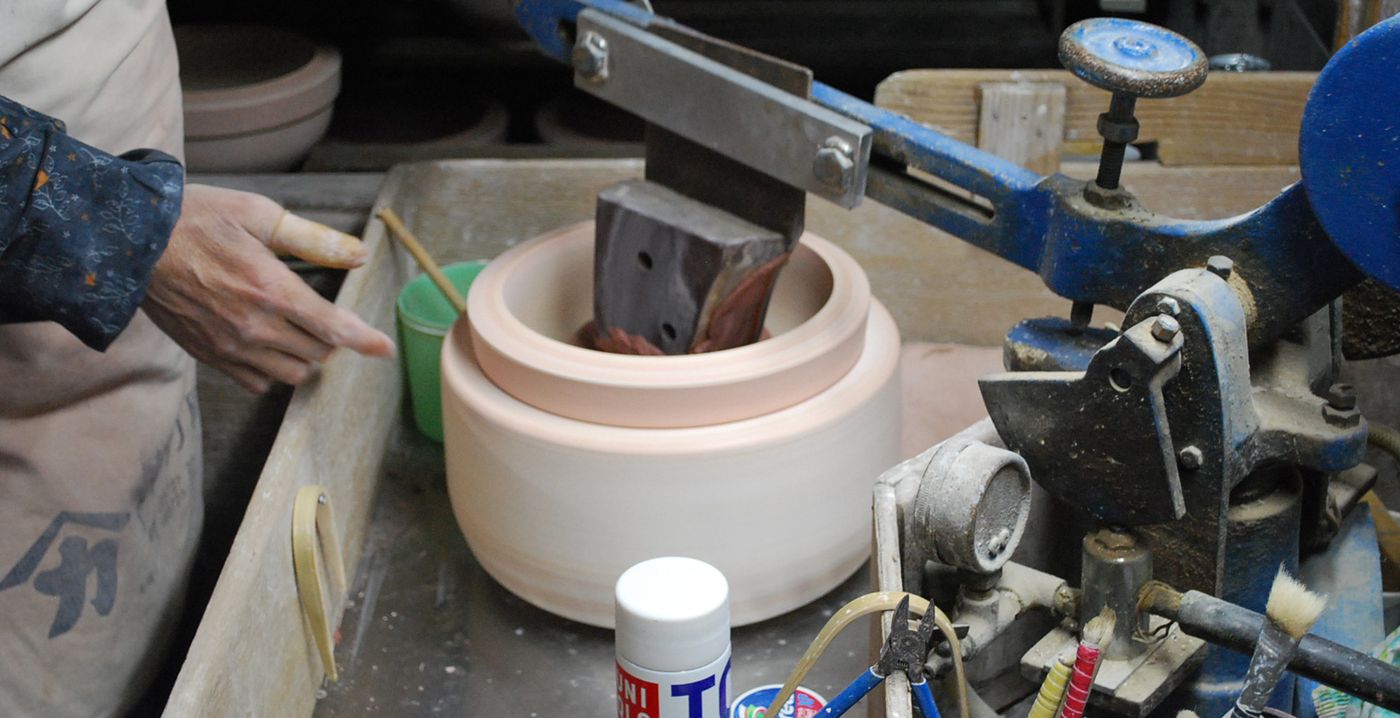
On the wheel and in the mold, a lump of clay becomes a bowl. Every clay has its own color and temper, so each piece fires a little differently.
Clay, hands, patience

Origins · 産地
Where our pieces come from, and the hands that make them.
Video courtesy of Nousaku, Takaoka
Behind every plate on our shelves are many hands: the one that shapes the clay, the one that paints the line, the one that opens the kiln to see what the fire has made.
We choose each piece in Tokyo with a long-established house of ceramics and lacquerware, working with makers and kilns across Japan. That house sells mainly for business use, to hotels, restaurants and traditional inns, so the pieces are made to be used, every day, at a real table.
The map
Tap a gold point to see the traditions that come from that region.
The making
A typical journey of a Mino-ware piece in Gifu, one of Japan’s great pottery regions. Choose a step, or let it play.


Our makers
Some of our pieces come from makers with a long name in Japanese craft. Here are two of them, in their own words and photographs.
 Photo: courtesy of Iwachu
Morioka, Iwate
岩鋳
Nambu ironware has been made in Morioka for more than 400 years. It grew with the tea ceremony: the local Nanbu lords brought kettle makers from Kyoto, and a craftsman later added a spout and a handle to a tea kettle, giving Japan the iron kettle that is still the symbol of the craft.
Iwachu was founded in Morioka in 1902. It designs, casts and sells its own ironware and makes about a million pieces a year, from classic kettles to colourful teapots for everyday tea. Genuine pieces carry the maker's quality stamp.
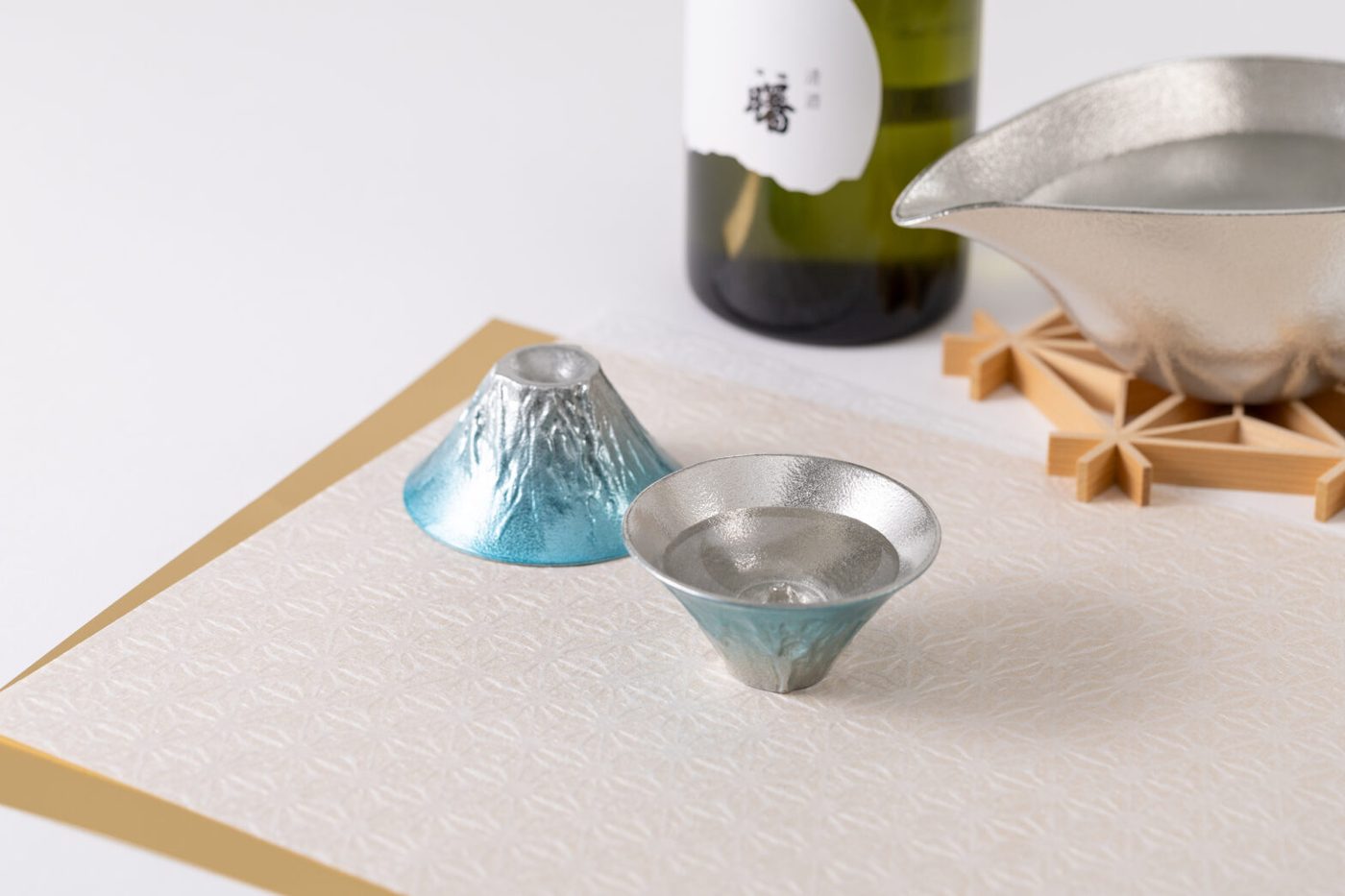 Photo: courtesy of Nousaku
Takaoka, Toyama
能作
Takaoka, in Toyama, has cast metal since 1609, and its copperware is a designated traditional craft of Japan. Nousaku began there in 1916, casting brass and bronze Buddhist objects, tea utensils and vases.
In 2003 the fourth generation, Katsuji Nousaku, developed tableware from 100% pure tin, a soft metal that can be bent by hand and keeps its silver colour. Each piece is cast in a mold, smoothed on a lathe and finished by hand. The factory, opened in 2017, welcomes visitors.
伝統 · Traditions
Each tradition has its own clay, its own fire and its own hand. Tap one to see the pieces in our shop made in that style.
 Saga
Arita 有田
Japan’s first porcelain, made in the hills of Saga since the early 1600s: fine white bodies with cobalt-blue painting, gold and wave patterns.
Explore
 Saga
Imari 伊万里
Porcelain from the Arita kilns that was shipped from the port of Imari: deep blue under the glaze, with red and gold painted over it.
Explore
 Ishikawa
Kutani 九谷
Bold overglaze enamels in green, yellow, purple, blue and red, often framed in gold. Made in Ishikawa on the Sea of Japan coast.
Explore
 Overglaze style
Nishikide 錦手
“Brocade” painting: dense patterns in red and gold enamel over white porcelain, like woven silk.
Explore
 Saga
Karatsu 唐津
Earthy stoneware with iron-brown brushwork and soft, warm glazes. Long loved by tea masters for its quiet, unforced look.
Explore
 Okayama
Bizen 備前
Unglazed stoneware fired for days in a wood kiln. Flame and ash leave the colors and markings; no two pieces match.
Explore
 Shiga
Shigaraki 信楽
One of Japan’s Six Ancient Kilns. Coarse clay, natural ash glaze and a warm orange “fire color” on the surface.
Explore
 Gifu (Mino)
Shino 志野
A thick white feldspar glaze with tiny pinholes and blushes of red where the fire touched the clay. A Mino classic.
Explore
 Gifu (Mino)
Oribe 織部
Copper-green glaze and playful, slightly off-center shapes, named after the tea master Furuta Oribe.
Explore
 Iron glaze
Tenmoku 天目
A dark, iron-rich glaze that breaks into silver and blue streaks and spots when it is fired.
Explore
 Glaze texture
Kairagi 梅花皮
A rough, crawled glaze surface that looks like ray skin, prized on tea bowls for how it feels in the hand.
Explore
 Kyoto
Kyo 京焼
Refined pottery from Kyoto, shaped for the tea ceremony: delicate forms with painted or glazed decoration.
Explore
 Tochigi
Mashiko 益子焼
Sturdy, earthy stoneware from Mashiko in Tochigi Prefecture, loved for its warm, honest glazes and everyday use.
Explore
 Iwate
Nambu 南部鉄器
Cast iron from Morioka in Iwate, shaped over more than 400 years alongside the tea ceremony: iron kettles and teapots that hold heat and age with use.
Explore
 Toyama
Takaoka 高岡
A town that has cast metal since 1609. Its copperware is a designated traditional craft of Japan, and today it also gives us tableware in pure tin.
Explore
No two pieces come out exactly alike.
Clay, weather and flame change every day. We keep those small differences, because they are the mark of a human hand.
Shop all piecesPhotographs from a Mino kiln in Gifu.
Photo credit: our supplier in Tokyo.

Our journey began with a deep admiration for Japanese craftsmanship and the timeless ritual of making by hand. Our pieces come from pottery regions across Japan, among them Arita in Saga, Mino in Gifu, Kutani in Ishikawa and Shigaraki in Shiga. We choose each one in Tokyo and send it to your table. Each piece tells a story of patience, balance, and respect for nature's materials.

At Ishi no KA, we share these stories with the world. Every vessel, every plate, every utensil in our collection reflects the quiet power of transformation — earth shaped by fire, tradition refined by time. A slightly uneven rim or a glaze that pooled unevenly isn't a flaw to hide; it's proof a human hand and a live flame made the piece.
Alert me if this item is restocked.
We often restock popular items or they may be returned by the other customers. If you would like to be notified when this happens just enter your details below.
We respect your privacy and don't share your email with anybody.
Alert me if this item is restocked
Thank you, we have now received and recorded your request to be notified should be restocked.
We will only use your email for this purpose.


